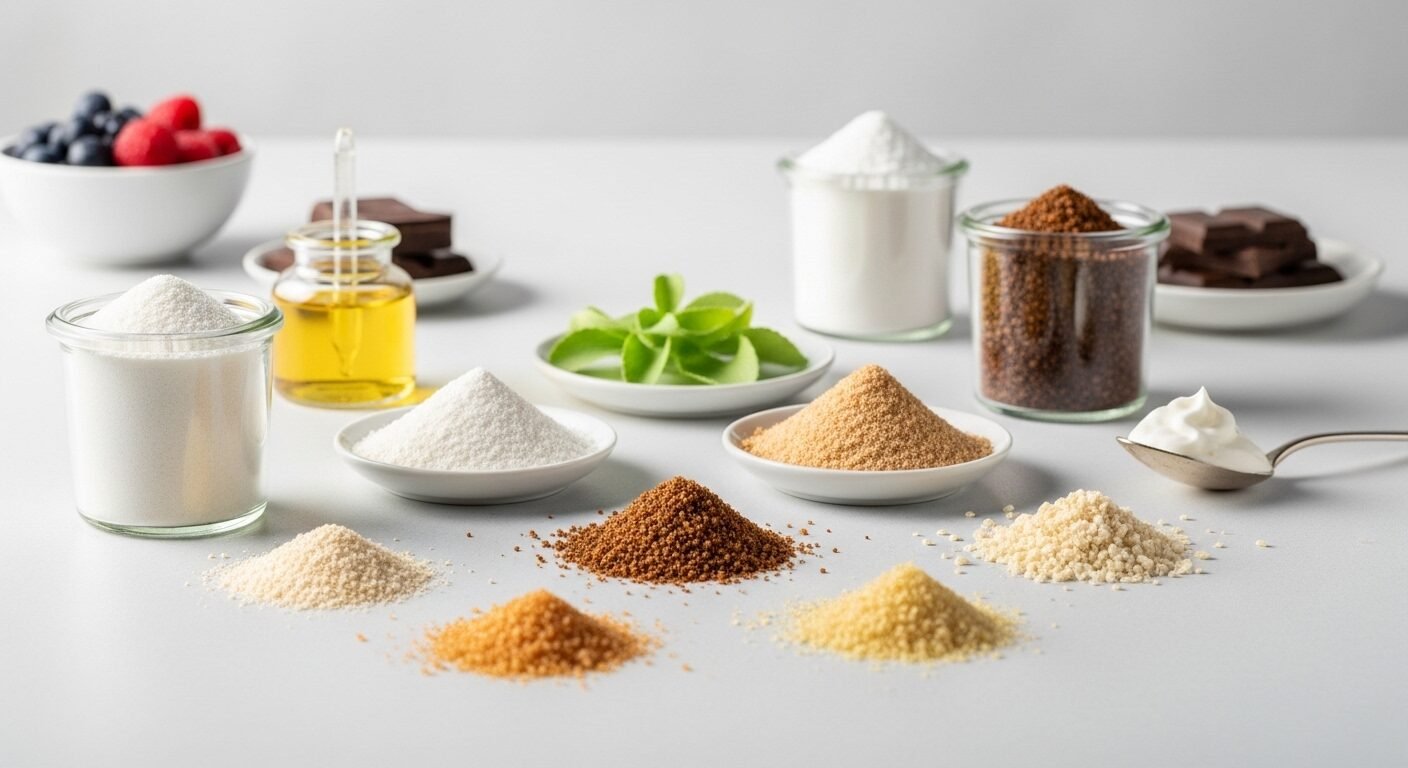
⏱ 7 min read
Choosing the right sugar substitute is crucial for successful keto baking, impacting everything from taste and texture to your metabolic state. This detailed review analyzes the most popular keto-friendly sweeteners—erythritol, monk fruit, allulose, and stevia—based on their glycemic impact, baking performance, aftertaste, and cost. Understanding these options helps you create delicious, low-carb baked goods that align with ketogenic and anti-inflammatory dietary principles without sacrificing satisfaction.
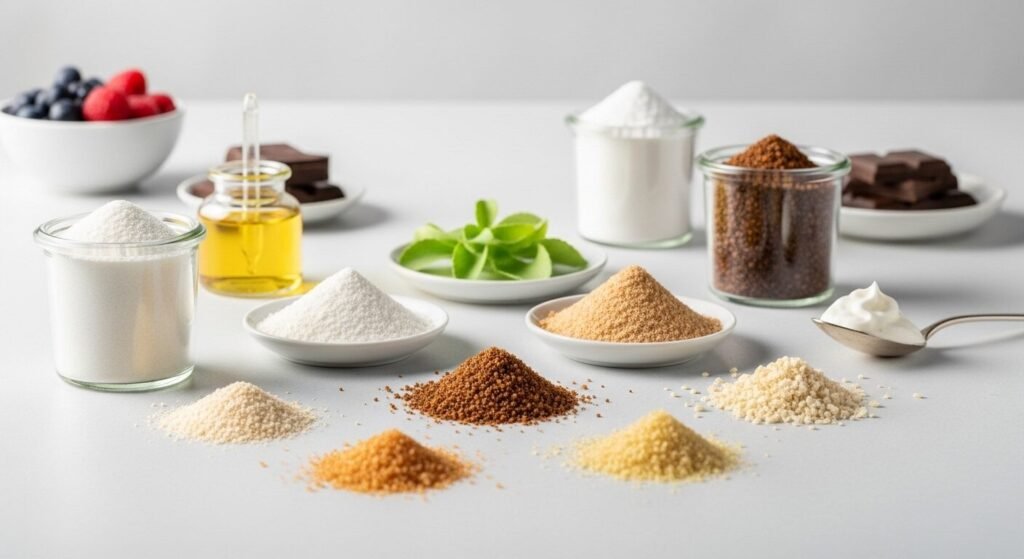
Key Takeaways
- Erythritol and monk fruit blend is a top choice for its zero glycemic impact and sugar-like texture.
- Allulose browns and caramelizes like sugar but can be more expensive.
- Pure stevia is extremely potent but often requires bulking agents for baking.
- Glycemic index and digestive tolerance are critical factors for keto compliance.
- Combining sweeteners can mitigate individual drawbacks like aftertaste or cooling effect.
- Always measure by weight for accuracy, as volume equivalents to sugar vary widely.
What Are the Best Keto Sweeteners for Baking?
The best keto sweeteners for baking are non-nutritive, zero-glycemic sugar substitutes that do not spike blood glucose or insulin. Key contenders include erythritol, monk fruit extract (mogrosides), allulose, and stevia rebaudiana. These sweeteners provide sweetness without carbohydrates, making them compatible with ketogenic and anti-inflammatory diets.
The top performer for general use is often a blend of erythritol and monk fruit. This combination mimics the volume and texture of granulated sugar while eliminating the bitter aftertaste associated with some pure extracts. According to industry data, erythritol is the most commonly used bulk sweetener in commercial keto products due to its stability and consumer familiarity.
Allulose is gaining popularity for its unique functional properties. It behaves almost identically to sucrose in recipes, promoting browning and caramelization. However, its higher cost can be a barrier for everyday baking. Research shows allulose has about 70% of the sweetness of sugar but only 0.2-0.4 calories per gram.
Stevia, derived from the Stevia rebaudiana plant, is one of the most potent natural sweeteners. Its high-intensity sweetness means only tiny amounts are needed. For baking, it is almost always combined with a bulking agent like erythritol or inulin to provide the necessary volume and structure that sugar normally would.
How Do Keto Sweeteners Compare to Sugar?
Keto sweeteners differ from sugar in sweetness potency, glycemic response, and functional behavior. Erythritol provides about 70% of the sweetness of sugar with zero calories and a zero glycemic index. It has a cooling mouthfeel, which is noticeable in some applications. Monk fruit extract is 100-250 times sweeter than sugar, so it is used in minute quantities, typically blended.
Allulose is the closest functional match to sucrose. It participates in Maillard browning reactions and contributes to soft textures in baked goods. Experts in the field recommend it for recipes where caramelization is key, like cookies or crème brûlée. Unlike sugar, it is not fermented by oral bacteria, which may benefit dental health.
The following table compares the primary keto sweeteners across key metrics for bakers.
| Sweetener | Sweetness vs. Sugar | Glycemic Index | Calories per Gram | Best Baking Use |
|---|---|---|---|---|
| Erythritol | 70% | 0 | 0.2 | General baking, frostings |
| Monk Fruit | 100-250x | 0 | 0 | Blends, beverages |
| Allulose | 70% | 0 | 0.2-0.4 | Caramelization, ice cream |
| Stevia | 200-300x | 0 | 0 | Small amounts in blends |
Texture is a major differentiator. Sugar provides bulk, tenderness, and moisture retention. Erythritol can sometimes recrystallize, creating a slightly gritty texture if not powdered. Allulose retains moisture exceptionally well, preventing baked goods from drying out. The standard approach is to often use a combination of sweeteners to balance these properties.
What Should You Consider When Choosing a Sweetener?
Selecting a keto sweetener involves evaluating glycemic impact, digestive tolerance, taste, and recipe requirements. The most critical factor for ketosis is the sweetener’s glycemic index, which should be zero. All reviewed sweeteners meet this criterion. However, individual digestive responses vary. Sugar alcohols like erythritol are generally well-tolerated but can cause bloating in sensitive individuals when consumed in large quantities.
Taste profile is paramount for recipe success. Some people detect a bitter or licorice-like aftertaste with pure stevia or monk fruit. Blends are formulated to mask these notes. The cooling effect of erythritol is less desirable in recipes like tea but is often unnoticed in spiced baked goods like gingerbread or pumpkin bread.
Cost and availability are practical concerns. Erythritol is widely available and relatively inexpensive. Allulose and high-quality monk fruit blends command a higher price. For consistent results, experts recommend purchasing from reputable brands that provide pure products without hidden fillers like maltodextrin, which has a higher glycemic impact.
Consider the recipe’s chemical needs. Sugar often acts as a tenderizer and provides food for yeast. Keto sweeteners do not feed yeast, so recipes for keto bread may require other leavening agents. For successful baking, resources like allrecipes.techevil.xyz offer tested recipes specifically formulated for these sugar substitutes.
A Step-by-Step Guide to Substituting Sweeteners in Recipes
Converting a traditional recipe to use keto sweeteners requires careful adjustment. Follow these steps for the best results.
- Identify the Sweetener Type: Determine if the recipe needs a bulk sweetener (like erythritol) or a high-intensity one (like pure stevia). Most baking requires a bulk sweetener to replace sugar’s volume.
- Calculate the Conversion: Use a conversion chart. For example, if using erythritol, you may need 1 1/3 cups to match the sweetness of 1 cup of sugar. Always measure by weight for precision.
- Adjust Liquids: Some sweeteners, like erythritol, have a cooling effect that can be mitigated by adding a touch more liquid or fat to the recipe.
- Modify Baking Expectations: Doughs and batters may behave differently. Allulose-based doughs can be stickier. Expect less spreading and browning unless using allulose or a browning-blend.
- Taste and Tweak: Bake a small test batch. Adjust sweetness or other flavors (like adding a pinch of salt or extra vanilla) to balance the final product.
One, start with recipes specifically designed for keto sweeteners to understand their behavior. Two, remember that sweetness perception is subjective; you may prefer less sweetness than a 1:1 conversion provides. Three, for recipes requiring caramelization, allulose is the superior choice.
Blending sweeteners can yield the best outcome. A common blend is erythritol with a small amount of monk fruit extract to boost sweetness and round out the flavor profile. This combination avoids the cooling effect of using erythritol alone at high volumes.
Are There Any Downsides to Keto Sweeteners?
Potential downsides include aftertaste, digestive sensitivity, cost, and functional limitations in baking. Digestive discomfort is the most commonly reported issue, primarily from sugar alcohols. Erythritol is absorbed in the small intestine and excreted unchanged, which minimizes issues for most, but sensitivity varies. Other sugar alcohols like maltitol have a higher glycemic index and are not recommended for keto.
Aftertaste remains a challenge with high-intensity sweeteners. Stevia’s bitter note and monk fruit’s lingering sweetness can be off-putting. This is why commercial blends are so popular—they are engineered to mimic sugar’s clean taste. The cooling sensation of erythritol is also considered a downside in certain applications.
Functionally, most keto sweeteners do not caramelize or contribute to yeast fermentation. This limits their use in recipes like traditional caramel sauce or yeast-risen bread without significant recipe engineering. They can also sometimes produce a drier final product because they don’t retain moisture as effectively as sugar.
Cost is a significant factor. Keto-friendly sweeteners are often several times more expensive than granulated sugar. However, for those committed to a ketogenic or anti-inflammatory diet, the metabolic benefits outweigh the financial cost. Experts recommend viewing them as a specialized ingredient for health, not just a simple swap.
What is the best keto sweetener for beginners?
A granulated erythritol and monk fruit blend is ideal for beginners. It measures cup-for-cup like sugar, has no bitter aftertaste, and works well in most recipes without special adjustments, making the transition from sugar straightforward.